A major announcement is reshaping the future of artificial intelligence. Two technology leaders have formed a groundbreaking alliance. This collaboration aims to revolutionize how advanced AI systems are powered and delivered.
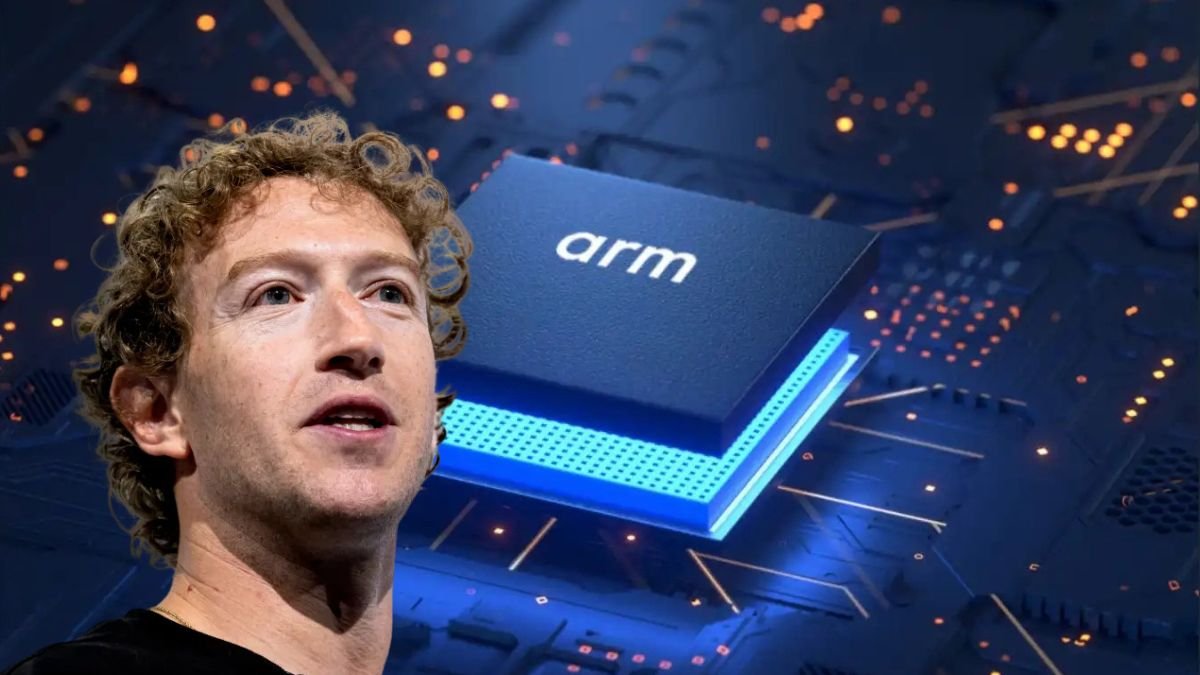
The social media giant is joining forces with the semiconductor design company Arm. This multi-year partnership represents a significant strategic shift. It focuses on enhancing the infrastructure that drives AI-powered features for a global audience.
Central to this move is the transition of core systems to Arm’s Neoverse platform. This technology is specifically optimized for cloud-based AI workloads. The goal is to handle the massive computational demands of modern AI services more efficiently.
This initiative supports a vast network of users. It impacts the experience for billions of people who rely on popular apps and technologies every day. The focus is on scaling this innovation responsibly to meet soaring demand.
Understanding the Strategic Partnership
A deep dive into the partnership reveals a core focus on computational efficiency as the key to AI’s future. This alliance between a social media titan and a chip design leader is a strategic response to the immense energy demands of advanced artificial intelligence.
Background of Meta’s AI ambitions
The social media company has placed artificial intelligence at the heart of its platform. AI drives content discovery and personalization for billions of people around the world.
These ambitions extend to augmented reality and next-generation wearable devices. Scaling these services efficiently requires a fundamental rethink of underlying infrastructure.
Arm’s role in power-efficient compute
Arm Holdings is a semiconductor design firm renowned for its low-power architectures. Its technology dominates the mobile market, a testament to its performance-per-watt leadership.
This expertise is now critical for the data center market. Efficient computing is no longer just for batteries; it is essential for sustainable global data centers.
Arm CEO Rene Haas brings a clear vision. He stated that AI’s next era will be defined by delivering efficiency at scale.
Rene Haas emphasizes a hybrid computing model. AI training happens in the cloud, but inference can run locally on devices, saving vast amounts of power.
This philosophy aligns perfectly with the needs of a tech giant aiming for sustainable growth. The partnership unites distinct strengths to tackle a shared challenge.
Technology and Innovation in AI Infrastructure
A critical component of the collaboration involves optimizing the entire software stack for superior AI performance. This deep technical work spans from low-level libraries to major application frameworks.
The goal is to create a more efficient and powerful infrastructure for next-generation AI models.
Advancements in Data Center Infrastructure and Compute
Engineers focused on key open-source components like PyTorch and FBGEMM. They tuned these technologies to exploit Arm’s specific architectural strengths.
This work delivered measurable gains in inference efficiency. It allows systems to process more data using less power.
The improvements benefit massive cloud computing environments. They also extend to smaller devices at the network’s edge.
Software Stack Co-Design and Open Source Contributions
A significant innovation is the integration of Arm’s KleidiAI with PyTorch’s ExecuTorch runtime. This maximizes performance-per-watt for AI workloads.
These optimizations are not kept private. The companies contribute them back to the global open-source community.
This approach accelerates technology adoption across the industry. It ensures that efficiency gains benefit the entire ecosystem of developers and users.
Meta partners up with Arm to scale AI efforts
This multi-year initiative represents a fundamental shift in how computational resources are allocated for personalized content delivery. The focus centers on deploying advanced processing technology throughout critical infrastructure.
Integration of Arm Neoverse in Ranking Systems
The social media company’s ranking recommendation systems now leverage Arm Neoverse platforms. These systems process billions of predictions daily across popular applications.
This integration delivers higher performance with lower power consumption compared to traditional x86 architecture. The recommendation engines represent some of the most demanding artificial intelligence workloads in the industry.
Performance-per-Watt Improvements and Efficiency Gains
Achieving performance-per-watt parity validates Arm’s architecture for hyperscale data center deployments. This efficiency gain translates directly to reduced operational costs and environmental impact.
The collaboration enables consistent compute architecture across every layer of infrastructure. From edge devices to massive data centers, the partnership scales efficiency throughout the entire technology stack.
These improvements allow for expanded capabilities while managing energy consumption responsibly. The technical implementation ensures hardware and software work together to maximize system performance.
Impact on AI Development and Global Data Centers
Massive infrastructure investments are reshaping how artificial intelligence will scale worldwide. This technology alliance creates ripple effects across the entire semiconductor industry.
Scaling AI from edge devices to megawatt data centers
The social media giant’s expansion includes two massive projects. The “Prometheus” data center in Ohio will deliver multiple gigawatts by 2027.
Another project called “Hyperion” spans 2,250 acres in Louisiana. This campus aims to provide 5 gigawatts of computational power when complete.
These centers represent the physical backbone for next-generation AI models. They must serve billions of people using various devices and apps.
Industry implications and competitive landscape
This partnership differs significantly from recent AI infrastructure deals. Unlike Nvidia’s $100 billion investment in OpenAI, there are no equity exchanges.
AMD also committed massive compute capacity to OpenAI with stock options. The market responded positively to this technology-focused approach.
Arm stock finished the day up 1.49% following the announcement. This reflects investor confidence in the company’s competitive position.
The collaboration validates efficiency-focused computing for the next era of AI. It could influence how tech companies build their infrastructure worldwide.
Conclusion
Efficiency and accessibility are the twin pillars of this landmark technology partnership. It represents a comprehensive reimagining of artificial intelligence infrastructure.
The collaboration demonstrates that future leadership will be defined by power-efficient compute. This approach spans from chip architecture to application-level software.
This full-stack strategy ensures billions of people can access sophisticated capabilities. It works on everything from massive data center systems to everyday devices like smart glasses.
As the Ray-Ban Wayfarer example shows, voice recognition runs locally on the glasses. This balances cloud and edge computing for optimal user experiences.
The partnership sets a new standard for how technology companies build sustainable and intelligent systems. It paves the way for a more connected future.